











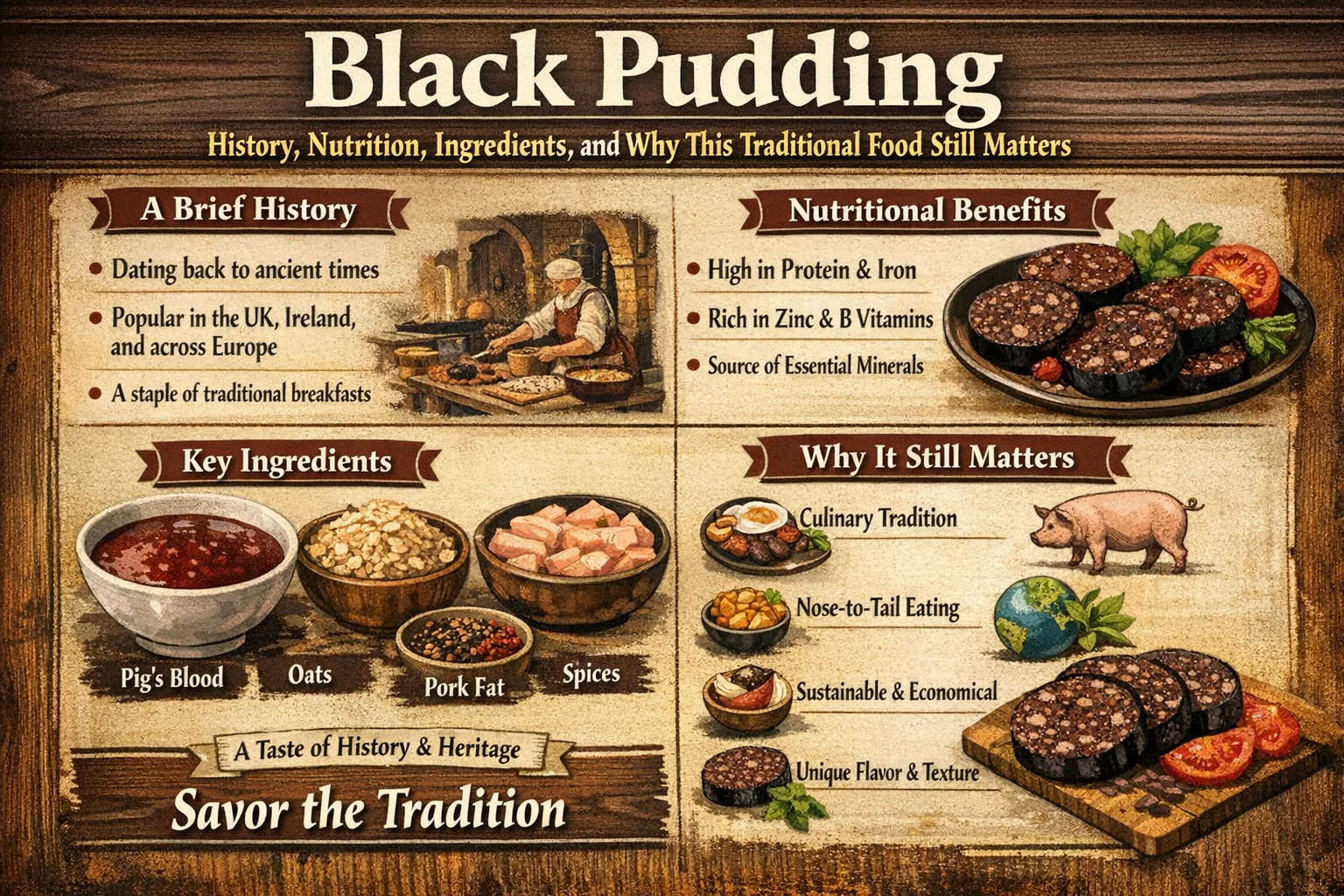
Black Pudding: History, Nutrition, Ingredients, and Why This Traditional Food Still Matters
Few traditional foods spark as much curiosity as black pudding. Loved across the United Kingdom, Ireland, and many parts of Europe, this rich, savory delicacy has centuries of culinary heritage behind it. For some, it’s a comforting breakfast staple; for others, it’s a gourmet ingredient appearing on modern restaurant menus.
Despite its rustic origins, black pudding has evolved into something far more than a traditional sausage. Today, chefs, food historians, and nutrition experts alike explore its cultural significance, nutritional value, and culinary versatility. Understanding where it comes from and how it’s used reveals why this humble dish continues to hold a respected place in global food culture.
What Is Black Pudding?
At its core, black pudding is a type of blood sausage made from animal blood—traditionally pig’s blood—combined with fat and a cereal binder such as oats or barley. The mixture is seasoned with spices, stuffed into a casing, and cooked until firm, producing the dark, rich sausage that defines the dish.
Although the ingredients may sound unusual to some, the result is deeply savory and satisfying. Properly prepared black pudding has a crumbly texture and a complex flavor profile that balances earthy richness with subtle spices, making it far more nuanced than its simple ingredient list suggests.
The Historical Origins of Black Pudding
The roots of black pudding stretch back thousands of years, long before refrigeration or modern food systems existed. Ancient cultures developed blood sausages as a way to use every part of an animal after slaughter, ensuring nothing went to waste. This philosophy of whole-animal cooking remains a cornerstone of traditional food cultures worldwide.
Over time, regional variations of black pudding emerged across Europe. In Britain and Ireland it became closely associated with hearty breakfasts, while in Spain and France similar blood sausages evolved with unique seasonings, grains, and preparation styles.
Traditional Ingredients That Define Black Pudding
The distinctive character of black pudding comes from a carefully balanced combination of ingredients. Each component contributes to texture, flavor, and structure, creating a product that can be sliced and fried while maintaining its rich interior.
Below is a breakdown of the core components typically found in traditional recipes.
| Ingredient | Purpose | Flavor Contribution |
|---|---|---|
| Pig’s blood | Primary protein base | Deep, earthy richness |
| Pork fat | Moisture and texture | Creamy mouthfeel |
| Oats or barley | Binding agent | Mild nuttiness |
| Onion | Aromatic balance | Gentle sweetness |
| Spices (pepper, nutmeg, herbs) | Flavor enhancement | Warm complexity |
| Salt | Preservation and seasoning | Enhances overall flavor |
Different regions adjust these proportions slightly, but the essence of black pudding always remains rooted in this simple, resourceful formula.
Nutritional Profile and Health Considerations
From a nutritional perspective, black pudding offers several surprising benefits. Because it is made with blood, it contains high levels of iron and protein, making it a dense source of essential nutrients often lacking in modern diets.
However, like many traditional sausages, black pudding can also contain significant fat and sodium depending on how it is produced. Moderation and sourcing from quality producers are important for those seeking to enjoy its benefits without overconsumption.
How Black Pudding Is Traditionally Made
The production of black pudding begins by mixing fresh animal blood with fat, grains, and seasoning. The mixture is then poured into sausage casings and gently cooked or poached until it sets into a firm but tender texture.
After cooling, the sausage can be sliced and pan-fried before serving. The cooking process creates a crisp exterior while keeping the interior soft and flavorful, a contrast that gives black pudding much of its culinary appeal.
Popular Culinary Uses Around the World
Although it is most famous as part of a full British or Irish breakfast, black pudding has gained popularity in modern cuisine far beyond morning plates. Chefs increasingly incorporate it into appetizers, salads, and gourmet entrées for its bold flavor and unique texture.
Sliced black pudding can add depth to dishes such as scallop pairings, rustic stews, or even contemporary tapas. Its savory intensity means a small amount can transform a dish, which is why many restaurants now treat it as a specialty ingredient rather than just a breakfast component.
As renowned British chef Marco Pierre White once noted:
“Traditional foods endure because they deliver flavor, honesty, and history in a single bite.”
Buying and Storing Quality Black Pudding
For the best culinary experience, sourcing high-quality black pudding is essential. Artisan butchers and specialty producers often follow traditional recipes using better ingredients and balanced seasoning, resulting in superior flavor and texture.
Once purchased, black pudding should be stored in the refrigerator and consumed within the recommended time on the packaging. If properly wrapped, it can also be frozen without significant loss of quality, allowing home cooks to keep it available for future meals.
Read More: Blue Curacao: Flavor, History, Cocktails, and Everything You Need to Know
Common Myths and Misconceptions
One reason black pudding sometimes intimidates new eaters is the misconception that it tastes overwhelmingly metallic or strong. In reality, when properly prepared, the flavor is mellow, savory, and balanced by grains and spices.
Another myth is that black pudding is an outdated or purely rustic food. In truth, contemporary chefs increasingly celebrate traditional ingredients like this because they represent sustainability, culinary heritage, and full-animal cooking practices.
Why Black Pudding Still Matters Today
In a world where food trends constantly shift, black pudding remains a powerful example of culinary resilience. Its longevity reflects both practicality and flavor—two qualities that continue to resonate with modern eaters seeking authentic food experiences.
As interest in heritage cooking and nose-to-tail cuisine grows, black pudding is gaining renewed appreciation. What once began as a practical farm dish now stands as a symbol of culinary tradition that bridges history, sustainability, and contemporary gastronomy.
Frequently Asked Questions
What does black pudding taste like?
Black pudding has a rich, savory flavor with mild spice notes and a slightly earthy depth. When fried, it develops a crisp outer layer while staying soft and crumbly inside.
Is black pudding healthy?
In moderation, black pudding can provide valuable nutrients such as iron and protein. However, because it may contain fat and sodium, it is best enjoyed as part of a balanced diet.
Is black pudding the same as blood sausage?
Yes, black pudding is a specific style of blood sausage commonly associated with Britain and Ireland, though similar versions exist throughout Europe and Asia.
How is black pudding usually served?
The most common preparation involves slicing and frying black pudding, often served with eggs, toast, tomatoes, and other breakfast items in a traditional full English or Irish breakfast.
Can you cook black pudding in different ways?
Absolutely. While frying is popular, black pudding can also be grilled, baked, or crumbled into dishes such as stuffing, salads, or gourmet appetizers.
Conclusion
The enduring popularity of black pudding reflects far more than nostalgia. It represents a culinary tradition rooted in sustainability, resourcefulness, and bold flavor. From humble farmhouse kitchens to modern restaurant menus, it continues to evolve while honoring its heritage.
For curious food lovers and seasoned cooks alike, exploring black pudding offers a deeper appreciation of how traditional foods shape culinary identity. Its story proves that some of the world’s most fascinating ingredients come from the simplest, most practical origins.