






Blue Curacao: Flavor, History, Cocktails, and Everything You Need to Know
Few ingredients in the cocktail world are as visually striking as blue curacao. With its bright ocean-like color and citrus-forward flavor, it instantly transforms ordinary drinks into vibrant, tropical creations. Behind that iconic shade, however, lies a fascinating history, a distinctive production process, and a surprisingly versatile flavor profile.
Bartenders, mixologists, and home cocktail enthusiasts rely on blue curacao not just for aesthetics but for balance and depth in drinks. Whether appearing in beachside classics, modern mixology experiments, or alcohol-free mocktails, it plays an important role in both flavor and presentation. Understanding where it comes from and how to use it properly opens the door to a whole new level of cocktail creativity.
What Is Blue Curacao
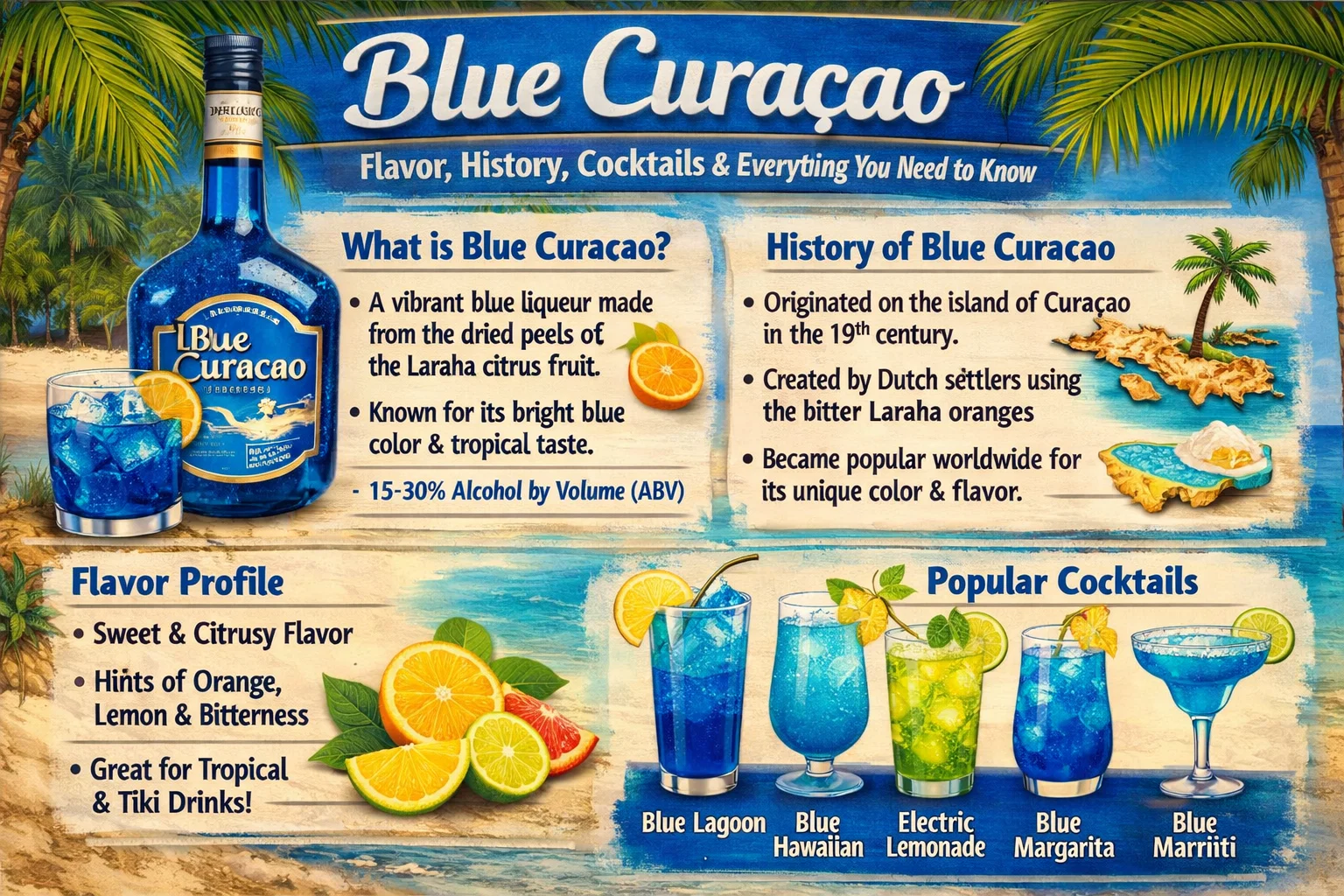
At its core, blue curacao is an orange-flavored liqueur derived from the dried peels of the Laraha citrus fruit grown on the Caribbean island of Curaçao. Despite its electric color, the flavor is rooted in bitter orange oils that provide a bright citrus character similar to other orange liqueurs like triple sec.
The vivid blue hue is purely cosmetic and added after distillation. Producers use food-safe coloring to create the signature appearance that makes cocktails pop. The flavor remains consistent regardless of color, which means blue curacao delivers the same citrus essence found in clear or orange variations of Curaçao liqueur.
The Origins of Curacao Liqueur
The story behind Curaçao liqueur dates back to the 19th century, when Dutch distillers began experimenting with the Laraha fruit. This citrus evolved from Valencia oranges brought to the island centuries earlier but developed a bitter taste due to the island’s arid climate.
Distillers discovered that the dried peels of the fruit contained aromatic oils perfect for liqueur production. Over time, the recipe spread throughout Europe and the Caribbean, eventually leading to colorful variations like blue curacao, which became particularly popular during the cocktail boom of the mid-20th century.
How Blue Curacao Is Made
The production process begins with harvesting Laraha oranges and drying their peels under the Caribbean sun. Once dried, the peels release highly concentrated aromatic oils that form the base flavor of the liqueur.
These peels are steeped in neutral spirits along with herbs and spices before being distilled and sweetened. After the distillation stage, producers add coloring to create blue curacao, turning a clear citrus liqueur into the iconic bright blue ingredient used in countless cocktails.
Flavor Profile and Aroma
Despite its dramatic appearance, blue curacao has a surprisingly delicate flavor. The primary taste is sweet orange with subtle bitterness and light herbal notes that come from the natural citrus oils.
This balance of sweetness and citrus brightness makes it ideal for cocktails that need both flavor and visual appeal. In many recipes, blue curacao complements rum, vodka, tequila, or coconut-based ingredients, helping create drinks that feel tropical, refreshing, and layered.
Why the Liqueur Is Blue
The color associated with blue curacao is entirely artificial and has no influence on the flavor. Historically, distillers began experimenting with colored variations as a way to differentiate their products and add visual excitement to cocktails.
The blue color quickly gained popularity in the 1950s and 1960s when tiki bars and tropical-themed drinks dominated the cocktail scene. Since then, blue curacao has become synonymous with bright, beach-inspired beverages served in bars around the world.
Classic Cocktails Made With Blue Curacao
Many iconic drinks rely on blue curacao to achieve both color and citrus complexity. The liqueur works especially well with rum, vodka, and tequila-based cocktails, adding a tropical personality to each glass.
Some of the most recognizable cocktails using blue curacao include the Blue Lagoon, Blue Hawaiian, and Electric Lemonade. These drinks demonstrate how a small amount of the liqueur can dramatically change a drink’s visual identity while maintaining balance with sweet and sour elements.
“Color influences how people experience flavor,” explains beverage consultant Daniel Monroe. “When a drink contains blue curacao, guests often expect something tropical and refreshing before they even take the first sip.”
Popular Brands and Quality Differences
Not all Curaçao liqueurs are identical. Different producers adjust sweetness levels, alcohol strength, and citrus intensity, creating noticeable variations in quality and flavor.
Understanding brand differences helps bartenders choose the right option depending on the cocktail they are building. Some versions emphasize sweetness, while others deliver a sharper citrus character.
| Brand | Alcohol Content | Flavor Profile | Typical Use |
|---|---|---|---|
| Bols Blue Curaçao | 21% ABV | Balanced citrus sweetness | Classic cocktails |
| DeKuyper Blue Curaçao | 24% ABV | Sweeter orange flavor | Party cocktails |
| Senior & Co. Curaçao | 31% ABV | Authentic Laraha citrus | Premium mixology |
| Giffard Blue Curaçao | 25% ABV | Bright, clean citrus | Craft cocktails |
| Monin Blue Curaçao Syrup | 0% ABV | Sweet citrus syrup | Mocktails |
Premium producers often emphasize authentic Laraha peel oils, while budget versions rely more heavily on sugar and artificial flavoring. Choosing a higher-quality bottle can significantly elevate a cocktail.
Using Blue Curacao in Non-Alcoholic Drinks
Although traditionally alcoholic, blue curacao flavor is also available in syrups designed for mocktails. These alcohol-free versions maintain the same citrus profile and vibrant color, making them ideal for creative beverage menus.
Mocktail recipes often combine blue curacao syrup with lemonade, pineapple juice, coconut water, or soda. The result is a bright, refreshing drink that delivers visual excitement without alcohol, making it popular for events, family gatherings, and hospitality venues.
Tips for Buying Blue Curacao
When selecting a bottle, consider both the intended use and the quality level of the liqueur. Cocktail enthusiasts often prefer brands that highlight authentic citrus oils rather than relying heavily on sweetness.
A good bottle of blue curacao should smell fresh and citrusy rather than syrupy. Checking the alcohol percentage and ingredient list can also provide clues about authenticity, with premium options typically containing fewer artificial additives.
Storage and Shelf Life
Like most liqueurs, blue curacao has a long shelf life thanks to its alcohol and sugar content. An unopened bottle can remain stable for years if stored in a cool, dark environment.
Once opened, blue curacao should still maintain quality for many months, especially when sealed tightly and kept away from heat and sunlight. Over time the color may fade slightly, but the flavor typically remains stable.
The Role of Blue Curacao in Modern Mixology
Modern bartenders continue to reinvent blue curacao through creative presentations and innovative cocktail structures. While it once dominated simple tropical drinks, today it appears in layered cocktails, craft tiki recipes, and visually dramatic presentations.
The ingredient’s visual power remains unmatched. When used thoughtfully, blue curacao can turn an ordinary cocktail menu into a memorable experience that captures attention both in person and across social media platforms.
Conclusion
Few ingredients combine visual impact and citrus flavor as effectively as blue curacao. From its Caribbean origins to its modern role in cocktail culture, the liqueur has evolved into a staple for bartenders and home mixologists alike.
Whether used in tropical classics, modern craft cocktails, or vibrant mocktails, blue curacao offers versatility that goes far beyond its color. Understanding its history, flavor profile, and proper usage allows anyone to unlock its full potential in drinks that are both beautiful and delicious.
Read More: Celeste Rivas Hernandez: Biography, Influence, and Growing Online Recognition
FAQ
What does blue curacao taste like?
Blue curacao tastes like sweet orange with subtle bitter citrus notes. The flavor comes from the dried peels of the Laraha fruit and resembles other orange liqueurs such as triple sec.
Is blue curacao alcoholic?
Traditional blue curacao is an alcoholic orange liqueur, typically containing between 20% and 30% alcohol by volume. However, non-alcoholic syrups with the same flavor are widely available.
Why is blue curacao blue?
The blue color is added using food-safe coloring. Blue curacao would naturally be clear, but the color enhances visual appeal in cocktails.
Can you drink blue curacao by itself?
While it can technically be sipped neat, blue curacao is usually used as a cocktail ingredient because of its sweetness and citrus intensity.
What cocktails commonly use blue curacao?
Many tropical drinks use blue curacao, including the Blue Lagoon, Blue Hawaiian, and Electric Lemonade, where it adds citrus flavor and a vibrant blue color.