









Cuban Flag: History, Meaning, Symbolism, and Cultural Significance
The cuban flag is one of the most recognizable national symbols in the Caribbean. With its striking blue stripes, white bands, bold red triangle, and single white star, it tells a story of revolution, identity, and the pursuit of independence. More than a decorative emblem, it reflects the historical struggles and aspirations that shaped modern Cuba.
Understanding the cuban flag means exploring the political movements, cultural influences, and ideals that inspired its design. From 19th-century independence movements to its presence in global Cuban communities today, the flag continues to symbolize resilience, unity, and national pride.
Origins and Historical Background
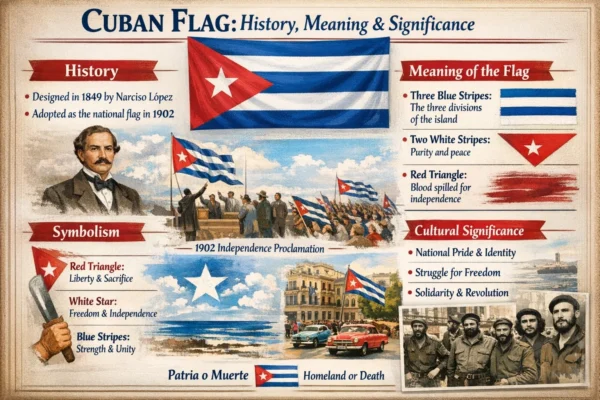
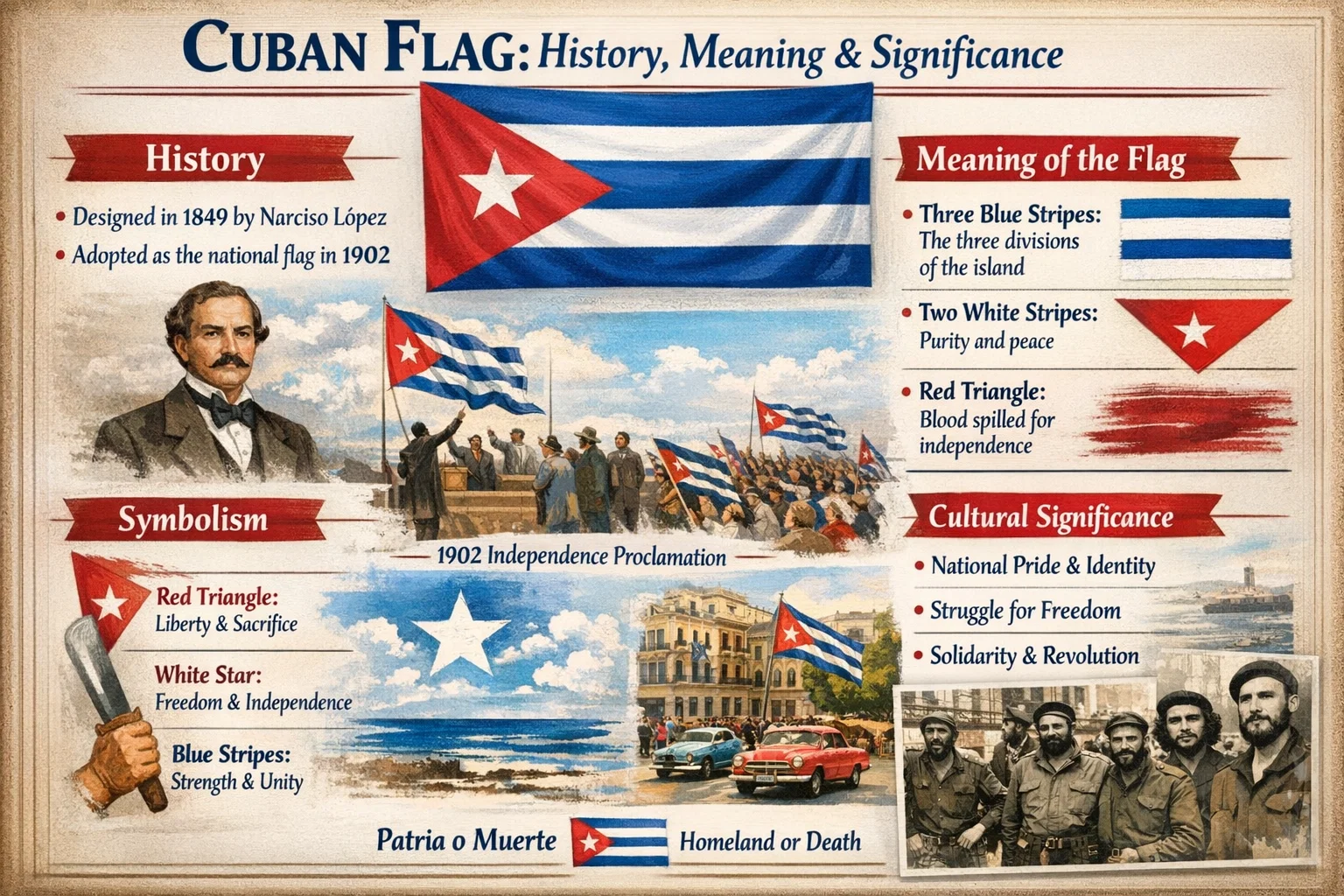
The story of the cuban flag begins in the mid-1800s during Cuba’s early struggle to break free from Spanish colonial rule. The flag was designed in 1849 by Venezuelan military leader Narciso López and Cuban poet Miguel Teurbe Tolón while they were in exile in the United States. Their goal was to create a powerful symbol that represented independence, unity, and the dream of a sovereign Cuban nation.
Although the design appeared decades before Cuba achieved independence in 1902, the cuban flag quickly became a rallying symbol for revolutionary movements. It was officially adopted when the Republic of Cuba was established, cementing its place as a lasting emblem of national identity and political aspiration.
Design and Visual Structure
At first glance, the cuban flag appears simple yet visually powerful. It consists of five horizontal stripes alternating between blue and white, alongside a red triangle at the hoist with a white five-pointed star. The clean geometry makes it instantly recognizable and easy to reproduce.
The structure of the cuban flag was carefully chosen to balance symbolism with strong visual impact. Its colors and shapes draw inspiration from revolutionary ideals and earlier independence flags used throughout Latin America during the 19th century.
Symbolism of Colors and Shapes
Every element of the cuban flag carries symbolic meaning tied to Cuba’s history and values. The three blue stripes represent the three original administrative regions of colonial Cuba, while the two white stripes symbolize purity and the strength of the independence cause.
The red triangle on the cuban flag reflects the blood shed in the struggle for freedom and also references the principles of liberty, equality, and fraternity associated with revolutionary movements. The single white star, known as “La Estrella Solitaria” or the Lone Star, represents independence and the guiding light of national sovereignty.
Evolution Through Political Change
Despite major political transformations throughout the 20th century, the cuban flag has remained unchanged. It survived the transition from Spanish colony to republic, the rise of revolutionary movements, and the establishment of Cuba’s modern political system.
Unlike many countries that redesign national symbols after regime changes, Cuba retained the cuban flag as a unifying national emblem. This continuity demonstrates how deeply the design is rooted in the country’s collective identity and historical narrative.
Comparison With Other Caribbean Flags
The Caribbean region features many vibrant national flags, yet the cuban flag stands out for its distinctive triangular design and symbolic minimalism. Its aesthetic contrasts with other nearby flags that emphasize different colors and patterns.
Below is a simplified comparison showing how the cuban flag differs from other well-known Caribbean national flags.
| Country | Key Colors | Major Symbols | Design Style |
|---|---|---|---|
| Cuba | Blue, white, red | Lone white star in triangle | Horizontal stripes with triangle |
| Puerto Rico | Red, white, blue | Single white star | Stripes with triangle |
| Dominican Republic | Red, blue, white | National coat of arms | Cross design |
| Jamaica | Green, black, gold | Diagonal cross | X-shaped layout |
| Bahamas | Blue, yellow, black | Black triangle | Horizontal stripes |
This comparison highlights how the cuban flag balances simplicity and symbolism, giving it a distinct visual identity across the Caribbean.
Cultural Meaning for the Cuban People
For many citizens, the cuban flag represents more than national sovereignty; it reflects cultural pride, resilience, and unity. It appears during national holidays, sporting events, cultural festivals, and official ceremonies throughout the country.
The cuban flag also carries emotional weight for Cuban communities abroad. For many people living outside the island, displaying the flag symbolizes heritage, family roots, and a connection to homeland traditions that persist across generations.
The Cuban Flag in Diaspora Communities
In cities with large Cuban populations such as Miami, Madrid, and Mexico City, the cuban flag often appears at cultural celebrations and political demonstrations. These displays show how national symbols can transcend borders and remain meaningful to diaspora communities.
For exiles and emigrants, the cuban flag can represent both nostalgia and hope. It acts as a reminder of identity while also expressing diverse perspectives about Cuba’s past, present, and future.
Flag Etiquette and Official Protocol
Like most national symbols, the cuban flag follows official protocols governing how it should be displayed. It is typically raised during daylight hours on government buildings, schools, and military installations across the country.
Respect for the cuban flag is deeply embedded in civic traditions. It should not touch the ground, be used as clothing, or be altered in ways that distort its symbolic meaning.
Common Misconceptions About the Flag
One common misconception is that the cuban flag was inspired directly by the United States flag. While both use red, white, and blue, the design actually reflects broader revolutionary symbolism and Latin American independence movements.
Another misunderstanding is that the cuban flag changed after the 1959 Cuban Revolution. In reality, the same flag adopted in 1902 remained the official national flag, demonstrating its enduring connection to Cuban identity rather than any specific political system.
The Cuban Flag in Modern Global Culture
Today, the cuban flag appears far beyond government buildings or political contexts. It is featured in art, music, fashion, and tourism imagery that celebrates Cuban culture around the world.
As the writer José Martí once observed, “A nation lives in its symbols as much as in its people.” The cuban flag continues to embody that idea by representing history, culture, and national character across generations.
Read More: Lox: The Complete Guide to This Iconic Smoked Salmon Delicacy
Conclusion
The cuban flag is far more than a piece of fabric with bright colors and bold shapes. It represents centuries of struggle, hope, and identity for the Cuban people. From its origins in the independence movement to its continued presence in global Cuban communities, the flag reflects a powerful national narrative.
Understanding the cuban flag provides insight into Cuba’s political history, cultural traditions, and collective values. As a symbol of unity and resilience, it remains one of the most meaningful national flags in the Caribbean and the world.
Frequently Asked Questions
What does the star on the Cuban flag represent?
The single white star on the cuban flag symbolizes independence and national unity, often referred to as the “Lone Star” guiding Cuba toward sovereignty.
When was the Cuban flag officially adopted?
The national cuban flag was officially adopted in 1902 when Cuba became an independent republic following the end of Spanish colonial rule.
Who designed the Cuban flag?
The flag was designed by Venezuelan revolutionary Narciso López and Cuban poet Miguel Teurbe Tolón during Cuba’s 19th-century independence movement.
Why does the Cuban flag have three blue stripes?
The blue stripes on the cuban flag represent the three historical administrative regions that existed in Cuba during Spanish colonial rule.
Is the Cuban flag similar to Puerto Rico’s flag?
Yes, the cuban flag and Puerto Rico’s flag share similar design elements, including stripes and a triangle with a star, reflecting shared historical influences.